
Environmental benefits of Heated Driveways
Every winter, snow transforms civilized adults into sidewalk chemists. Salt in one place, deicer in another, a hopeful dusting of sand, all merging discreetly into the earth and water supply like a seasonal pollution practice that goes unexamined. This is the point at which a heated driveway transforms from a luxury gadget into an ecological solution subtly integrated into the surroundings.
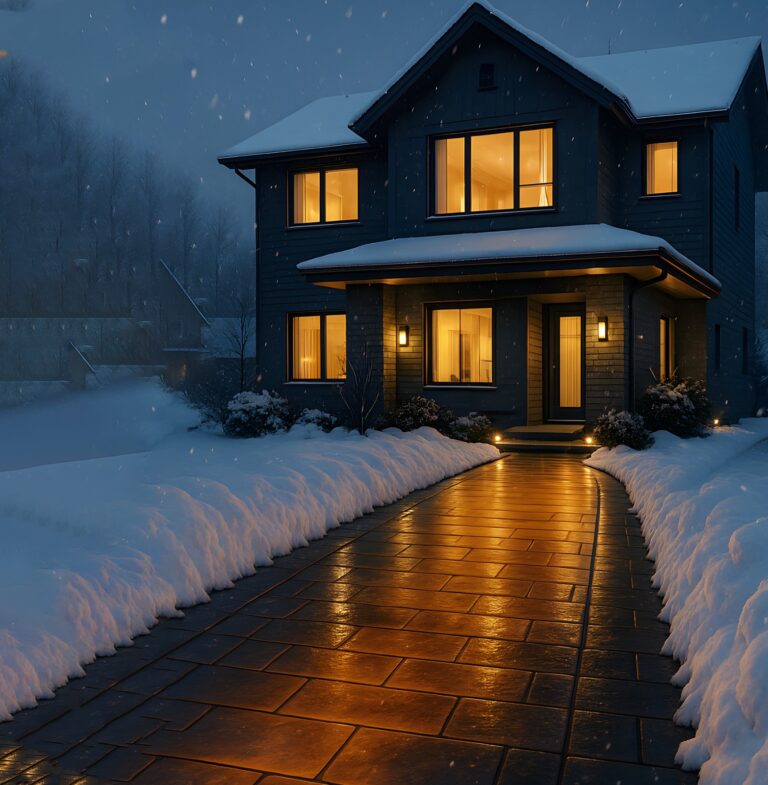
When discussing the environmental benefits of heated driveways, the true focus is not on their functions, but on what they avert. No chemical leaching. No contamination from salt. Reduced waste of materials. Reduced number of fuel-operated machines. A snow melting driveway system eliminates a chaotic, chemical-laden winter process with a managed, energy-efficient approach.
Eliminating Salt and Chemical De-Icers
A major environmental issue linked to winter maintenance is road salt. Sodium chloride and various de-icing chemicals infiltrate soil and groundwater each season. As time passes, this raises salinity in freshwater systems, harms ecosystems, and impacts drinking water quality in colder areas.
A heated driveway system eliminates the requirement for salt completely. Snow melts via built-in heating elements instead of chemical processes. This stops chloride contamination at its origin and lessens the overall ecological harm caused by countless homes engaging in the same winter routine.
Reducing Polluted Runoff into Water Systems
As snow melts, water from driveways enters storm drains and ultimately reaches rivers and lakes untreated. When this water transports salt and substances, it directly leads to water pollution.
The heated driveway environmental impact is evident here. Water that drips from a heated surface is merely water, not a mix of chemicals. In residential areas where runoff from multiple houses merges, this variation greatly lessens the load on local drainage systems and natural water bodies.
Protecting Soil and Landscaping Health
Salt does not quietly remain on concrete. It extends into adjacent soil, influencing grass, vegetation, bushes, and tree roots. Often, brown lawns and wilting plants by driveways stem from continuous salt exposure instead of inadequate gardening.
Utilizing a snow melting driveway system helps homeowners safeguard nearby plants from chemical stress. Healthier soil results in fewer plant replacements, decreased fertilizer consumption, and less landscaping waste as time passes.
Extending Driveway Lifespan and Reducing Material Waste
Freeze-thaw cycles can be harsh on concrete and asphalt, particularly when salt speeds up the degradation of the surface. Fissures, holes, and surface wear result in regular repairs or complete driveway overhauls. Every repair needs raw materials, manufacturing energy, and transportation emissions.
A heated driveway stops ice from forming and minimizes moisture infiltration, thereby reducing structural damage. This longer lifespan decreases the necessity for resurfacing and reconstruction, reducing long-term material use and environmental impact.
Lowering Emissions from Snow Removal Equipment
Conventional snow clearing depends on gasoline-operated snow blowers, plows, and service trucks. These machines generate carbon emissions and noise pollution during continuous clearing trips in winter.
A heated driveway system enables snow to melt on its own without any mechanical assistance. Gradually, this lessens the dependency of households on fuel-driven devices and helps decrease winter emissions in residential areas.
Energy Use Versus Chemical Pollution
Certain critics highlight electricity or energy consumption as a downside. Nonetheless, contemporary systems frequently link to intelligent sensors that turn on solely during snow and icy weather. Hydronic systems can also be fueled by energy-saving boilers or renewable energy sources.
When assessing heated driveways environmental impact against the extensive ecological harm from salt mining, chemical manufacturing, packaging, transportation, and runoff pollutants, the energy consumption appears to be a more regulated and frequently cleaner compromise.
Supporting Sustainable Winter Home Maintenance
The environmental benefits of heated driveways correspond with wider sustainable lifestyle habits. Rather than responding to snow with chemicals and equipment, homeowners implement a preventative approach that lowers pollution, waste, and resource consumption.
This change transforms winter maintenance from an environmentally damaging practice into a cleaner, more sustainable method that safeguards water, soil, air quality, and the longevity of infrastructure simultaneously.
A Quiet but Meaningful Environmental Upgrade
A heated driveway does not appear to be an eco-friendly feature. There are no solar panels visible, no noticeable eco-labels, no significant lifestyle alterations. However, it subtly eliminates one of the most chemically demanding practices of winter life.
A snow melting driveway system provides environmental benefits that build up annually by removing deicers, minimizing runoff pollution, safeguarding landscaping, prolonging material life, and decreasing dependence on fuel-powered machinery.
What seems to be an enhancement in comfort is, in fact, a sensible environmental choice. It minimizes the environmental impact of winter home care in ways that many homeowners are often unaware of needing.